Weight Loss Research on Repeating Meals
In a culture that offers endless food choices and constant decision-making, many people find that eating well is less about knowledge and more about consistency. Could repeating meals be your solution to help you lose weight?
Recent research from the American Psychological Association highlights a surprisingly simple idea: repeating meals and keeping calorie intake steady may support more effective weight loss than constantly varying what you eat.

Diet Study on Repeating Meals
Published in the journal Health Psychology, the study followed 112 adults enrolled in a structured behavioral weight loss program. Participants tracked their meals and weight daily over 12 weeks.
Researchers focused on two key diet patterns:
- how consistent participants were with their daily calorie intake
- how often they repeated the same meals rather than introducing new foods.
Those who developed more routine eating habits – both in terms of calorie stability and meal repetition – lost more weight on average (about 5.9% of body weight) compared to those with more varied diets (about 4.3%).
Rethinking Meal Choices for Weight Loss
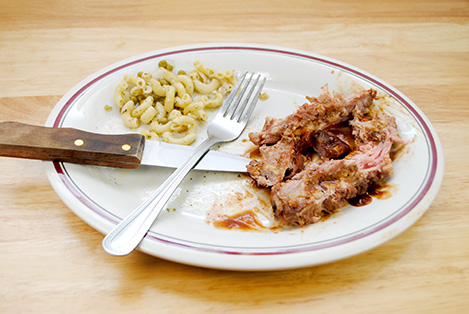
At first glance, this may seem counterintuitive. We often associate dietary variety with better health. But in today’s environment – where convenience foods, emotional eating cues, and time pressures are pervasive – simplicity can reduce the mental load of decision-making. As lead author Charlotte Hagerman notes, routine eating may make healthy choices feel more automatic, requiring less effort and self-control.
From a psychological perspective, this finding aligns with what we see clinically at Prasad Counseling and Training.
Consistency reduces cognitive fatigue.
When meals are predictable, individuals spend less time negotiating with themselves about what to eat, which lowers the likelihood of impulsive or emotionally driven choices. In other words, structure creates stability.
Mental Health & Weight Loss

However, there is an important layer often overlooked in weight loss conversations: the role of anxiety and depression. Many individuals who struggle to maintain a meal plan are not lacking discipline – they are navigating internal states that directly affect appetite, motivation, and decision-making.
Anxiety, for example, can lead to both under-eating and over-eating. Heightened physiological arousal may suppress appetite during the day, followed by increased cravings in the evening when the body seeks regulation.
Depression, on the other hand, often disrupts energy, planning, and follow-through. Even simple tasks – like preparing a familiar meal – can feel disproportionately effortful. In both cases, inconsistency in eating patterns is not a failure of willpower; it is a reflection of underlying emotional and cognitive strain.
Benefits of Psychotherapy
This is where psychotherapy becomes highly relevant. A structured meal plan – especially one built on repetition – can be effective, but only if the psychological barriers to consistency are addressed.
Therapy helps individuals identify patterns such as emotional eating, avoidance, all-or-nothing thinking, or self-criticism that often derail even the best nutritional strategies.
In cognitive-behavioral work, for instance, clients learn to anticipate high-risk moments—like stress after work or unstructured weekends—and develop more intentional responses. Rather than relying on motivation alone, they build systems: a small set of go-to meals, consistent grocery routines, and realistic expectations. Importantly, therapy also targets the emotional drivers behind eating patterns, helping individuals regulate mood without relying solely on food.
Nutritional Psychiatry
In addition, psychotherapy can introduce you to nutritional psychiatry, a new field that goes beyond reducing caffeine and sugar intake. It looks at how specific foods can influence neurotransmission and emotions.
The study also found that greater day-to-day calorie fluctuations were associated with less weight loss. Clinically, this makes sense. Large swings in intake often mirror swings in mood, stress, or routine. By stabilizing both emotional and behavioral patterns, individuals are better able to maintain consistency over time.
It is worth noting that the researchers caution against overgeneralizing the findings. The study shows correlation, not causation, and dietary variety—especially within healthy food groups—remains important for overall nutrition. Still, the takeaway is practical and actionable: simplifying food choices may improve adherence, particularly in a challenging food environment.

Solutions to Physical & Mental Health
For many people, the path forward is not a more complex diet, but a more supportive structure – one that accounts for both behavior and mental health.
If you find yourself starting and stopping meal plans, or struggling to stay consistent despite your best efforts, it may be less about what you are eating and more about what is happening beneath the surface.
Psychotherapy offers a space to understand and address those patterns, making consistency not just possible, but sustainable. Start a new habit that you can repeat- make an appointment with one of our therapists today!