Why Smart, Successful People Still Misjudge Their Abilities
Here at Prasad Counseling and Training, many of our patients are highly trained professionals – medical providers, engineers in oil and gas, project managers, teachers, and attorneys. They work in demanding environments where competence matters, decisions carry consequences, and confidence is often expected.
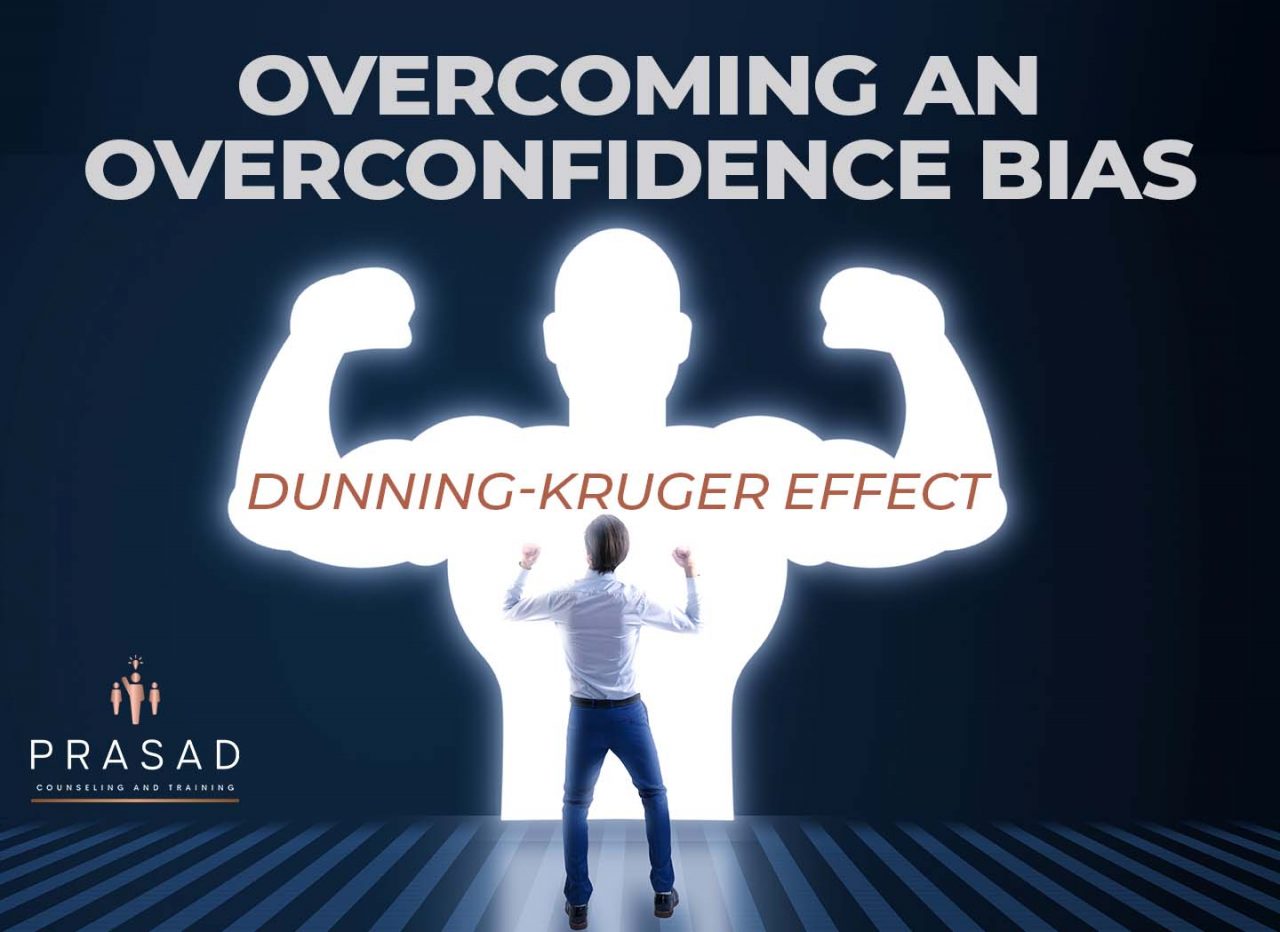
But even among highly capable professionals, there’s a psychological pattern that can quietly influence decision-making: the Dunning–Kruger effect.
An recent article on Atlassian.com explains the concept simply: the Dunning–Kruger effect is a cognitive bias in which people overestimate their own knowledge or abilities, particularly when they have limited experience in a specific area. The phenomenon was first described by psychologists David Dunning and Justin Kruger in a 1999 study showing that people who performed poorly on tests of humor, grammar, and logic also dramatically overestimated how well they had done.
This finding doesn’t mean people are unintelligent. Rather, it highlights a paradox: the skills needed to perform well are often the same skills needed to evaluate performance accurately. When those skills are still developing, people may not yet have the awareness to recognize their own gaps.
High-Achieving Professionals are Not Immune
 If you are a physician, nurse practitioner, or other medical provider, you are likely to operate in an environment where decisiveness is valued.
“Confidence is essential when diagnosing a patient or responding to a clinical problem,” says Prasad Counseling and Training Practice Owner, Bill Prasad, LPC-S.
Yet medicine is also a field where the volume of knowledge is vast and constantly evolving. The Dunning–Kruger effect can sometimes appear when clinicians move into unfamiliar areas – such as new technologies, administrative leadership, or policy decisions – where their expertise is still developing. “Our practice has the contract with the EAP that serves Methodist Hospitals. We work with many providers who face challenges,” he adds.
Engineers in the oil and gas industry face similar dynamics. Engineering culture rewards technical mastery and problem-solving. However, when projects involve complex interdisciplinary systems—finance, regulatory frameworks, or human behavior—technical confidence can occasionally spill over into domains where expertise is still forming.
Leadership: Pressure on Managers to be Confident
Project managers encounter another version of this bias. Leadership roles often require projecting certainty in front of teams and stakeholders. Yet managing timelines, human dynamics, risk forecasts, and organizational politics simultaneously means no one has full mastery of every variable.
The temptation to appear fully confident can sometimes mask areas where collaboration or feedback would strengthen outcomes.
Dunning-Kruger for Academics
 Teachers and educators also experience this dynamic.
“Many teachers develop deep mastery in curriculum and pedagogy, yet new educational technologies, policy changes, or classroom behavioral challenges can create unfamiliar territory,” says Prasad Counseling and Training Group Counselor and Former School Counselor, Carroll Prasad, LPC-S.
The Dunning–Kruger effect can occur during these transitions when early exposure to a new approach creates a sense of confidence before deeper mastery develops.
 “Attorneys may recognize a similar pattern,” says Prasad Counseling and Training Psychotherapist Hannah Schaeffer. “Legal training builds analytical reasoning and persuasive confidence—two qualities that serve clients well,” she adds.
However, the law contains countless specialties. An attorney who is brilliant in litigation may initially underestimate the complexity of tax law, intellectual property, or regulatory compliance.
The Learning Curve Behind the Bias
The Atlassian article connects the Dunning–Kruger effect to a model called the four stages of competence:
- Unconscious incompetence – You don’t yet realize what you don’t know.
- Conscious incompetence – You recognize gaps and begin learning.
- Conscious competence – You can perform the skill with effort.
- Unconscious competence – The skill becomes second nature.
The Dunning–Kruger effect tends to show up early – between the first and second stages – when initial exposure creates confidence before experience has caught up.
Matters for Mental Health & Professional Growth
In high-performance professions, overconfidence can create several challenges. It can block learning if feedback is ignored. It can strain team trust when someone repeatedly overpromises. In safety-sensitive fields—medicine, engineering, or law—the stakes can also be significant.
But there is another side to the story. A small degree of optimism can also push people to attempt ambitious goals they might otherwise avoid. In that sense, confidence can be a powerful motivator.
Building Healthier Self-Awareness
 Awareness is the best antidote to this bias. The Atlassian article suggests several strategies that are particularly relevant for professionals:
- Seek honest feedback from colleagues and mentors.
- Reflect on past projects to identify where strengths and gaps consistently appear.
- Encourage psychological safety on teams, where people can admit uncertainty without fear of embarrassment.
- Stay committed to lifelong learning, even in areas where you already feel competent.
For professionals like medical providers, engineers, project managers, teachers, and attorneys, humility is not weakness—it is a cognitive advantage.
Understanding the Dunning–Kruger effect doesn’t mean doubting yourself. Instead, it offers something more valuable: a clearer, more realistic understanding of where your strengths truly shine and where growth is still unfolding.
Why Group Psychotherapy Can Help
One of the most powerful ways to develop accurate self-awareness is through group psychotherapy.
 “In a well-facilitated therapy group, individuals receive real-time feedback from others who observe their communication style, assumptions, and blind spots,” says Group Leader and Prasad Counseling and Training psychotherapist Thomas Fryar. “This kind of interpersonal mirror can gently challenge overconfidence while also correcting the opposite problem—unnecessary self-doubt,” he adds.
Group therapy also creates a psychologically safe environment where high-achieving professionals can practice curiosity, humility, and authentic dialogue. Over time, many people discover that the insights they gain from peers help them become not only more self-aware individuals, but also more effective leaders, collaborators, and decision-makers in their professional lives.
Understanding the Dunning–Kruger effect doesn’t mean doubting yourself. Instead, it offers something more valuable: a clearer, more realistic understanding of where your strengths truly shine and where growth is still unfolding.